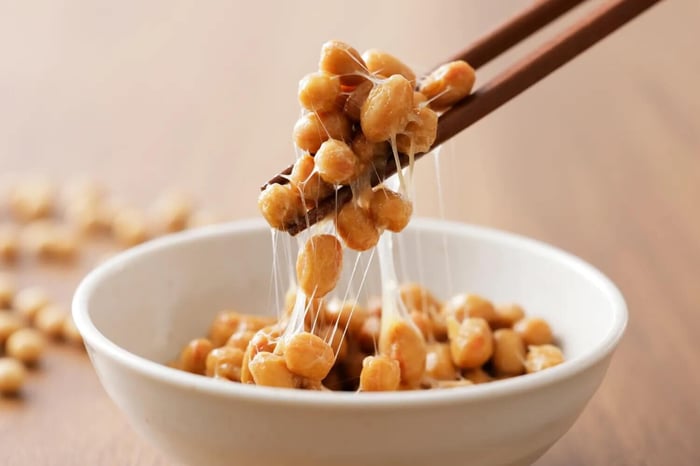

Nattokinase is a fibrinolytic enzyme produced during the fermentation of soybeans with beneficial bacteria.
Nattokinase appears to work through multiple approaches: by directly breaking down fibrin and activating plasmin, the body’s main fibrinolytic enzyme.
Most commercial products contain 2,000 FU per serving, but larger clinical studies have investigated much higher doses. Toku Flow is formulated at 10,800 FU per serving.
One of the core areas of interest in nattokinase research is fibrinolytic activity. Fibrinolytic activity is the body's natural process for breaking down fibrin, the protein that forms the framework of blood clots. Research suggests nattokinase may support this system through several pathways.
However, understanding how it works also means understanding why the dose (measured in fibrinolytic units, or FU) may matter just as much as the ingredient itself. Here’s what to know with Toku .
What Is Fibrinolytic Activity?
Fibrin is a structural protein involved in blood clot formation. It's kind of like a natural gauze bandage that wraps and helps stabilize blood into a clot. Blood clot formation is essential for survival. Without fibrin, even minor injuries could become dangerous.
Once a blood clot has served its purpose, the body relies on a natural fibrinolytic system to break down fibrin. The primary enzyme involved in this process is plasmin, which is generated when plasminogen is activated by tissue plasminogen activator (t-PA).
When this system becomes impaired or overwhelmed, fibrin accumulation may increase. Researchers have associated excess fibrin activity with vascular dysfunction, clot formation, and plaque stability in atherosclerosis.
Research suggests nattokinase may support the body’s fibrinolytic system through two primary mechanisms. Nattokinase shows potential for directly breaking down fibrin and also supporting the conversion of plasminogen into plasmin.
How Does Nattokinase’s Fibrinolytic Mechanism Work?
Nattokinase is a serine protease enzyme composed of 275 amino acid residues with a molecular weight of approximately 27.7 kDa. It is produced during the fermentation of soybeans by Bacillus subtilis natto and was first identified in 1987 by researcher Hiroyuki Sumi.
That may sound overwhelmingly technical, but what you need to understand is much simpler. Nattokinase is something that occurs naturally, and it's made of things your body already understands how to use.
Nattokinase may work in two ways that simultaneously produce the benefits that research suggests.
Direct Fibrin Degradation
Research suggests nattokinase can directly cleave fibrin itself, cutting off the natural bandage that holds a blood clot together. In laboratory settings, the enzyme has demonstrated fibrin-degrading activity, which is why it is classified as fibrinolytic.
Activation of Plasmin
Nattokinase may also support fibrinolysis indirectly by increasing the conversion of plasminogen into plasmin, the enzyme your body makes and uses to naturally clear blood clots.
Some preclinical research suggests nattokinase may enhance tissue plasminogen activator, or t-PA, activity while also influencing inflammatory signaling pathways associated with vascular dysfunction.
Studies have explored effects involving inflammatory factors such as TNF-alpha and IL-6, both of which are connected to endothelial stress and vascular inflammation.
Why Do Nattokinase Timing and Duration Matter?
Pharmacokinetics refers to how something works in your body and how long you can expect to feel its effects. It's an important part of research and use of nattokinase because the enzyme's pharmacokinetics demonstrate its potential .
Research suggests nattokinase reaches peak serum concentration approximately 13 hours after ingestion. Human crossover trials have documented measurable fibrinolytic activity around 8 hours post-dose, with detectable presence in serum for at least 48 hours.
In practical terms, nattokinase may begin working the same day you take it, and its effects may last longer than you'd expect from a supplement. That's a meaningful pharmacokinetic profile compared to many pharmaceutical fibrinolytics.
What Does the Research Show About Nattokinase Dosing?
Enzymatic reactions are dose-dependent with any enzyme, and nattokinase is no exception. Below certain activity thresholds, enzymes may not produce measurable physiological effects.
That principle matters because most commercial nattokinase supplements contain approximately 2,000 FU per serving. Historically, 2,000 FU became a commonly cited reference point in supplement markets and some European guidance discussions. Newer research has raised questions about whether that amount consistently produces measurable cardiovascular effects.
Chen et. al Study
The most frequently discussed nattokinase clinical trial is the Chen et al. study published in Frontiers in Cardiovascular Medicine in 2022. This study followed 1,062 participants for 12 months, making it the largest published human nattokinase study to date.
Researchers investigated multiple dosing levels:
3,600 FU/day
10,800 FU/day
The 10,800 FU/day group demonstrated measurable improvements in markers associated with atherosclerosis progression and lipid-related parameters . The 3,600 FU/day group did not produce statistically significant effects.
The authors explicitly stated that their findings challenged the commonly recommended 2,000 FU daily dose. That does not automatically establish 10,800 FU as the perfect dose for everyone. It only establishes that 3,600 FU is unlikely to have a meaningful effect.
Earlier, smaller studies using approximately 6,000 to 7,000 FU per day also reported changes in lipid markers and carotid plaque-related measurements in hyperlipidemic participants.
Research suggests nattokinase may demonstrate threshold-dependent activity. There is no current gold standard for dosages , but we do know that effects become clearer and more prevalent at higher dosages.
More human randomized controlled trials are still needed before definitive dosing conclusions can be made.
The Toku Flow Difference
Toku Flow is formulated at 10,800 FU per serving — matching the dose used in the Chen et al. (2022) clinical study and significantly higher than the 2,000 FU found in many commercial nattokinase supplements. That formulation decision was intentional and is rooted in where the published clinical evidence currently points.
Toku Flow is a dietary supplement, not a medication, and it's designed to complement physician-directed care, not replace it. Always speak with your healthcare provider before starting nattokinase, especially if you take blood thinners or any cardiovascular medications.
The Bottom Line on Nattokinase’s Fibrinolytic Activity
Nattokinase fibrinolytic activity is more sophisticated than most supplement marketing suggests. The enzyme appears to work through multiple interconnected pathways involving fibrin degradation, plasmin activation, and vascular signaling.
Understanding the mechanism also clarifies why dose matters. Research increasingly points to an activity threshold below which nattokinase may not produce measurable effects — and most products on the market don't clear it.
As the science continues to develop, FU dosing and clinical transparency will only become more important for anyone evaluating nattokinase seriously.
FAQs
What does FU mean in nattokinase supplements?
FU stands for fibrinolytic units, which measure the enzyme’s activity level rather than its physical weight.
Why is nattokinase called fibrinolytic?
Research suggests nattokinase may support fibrin breakdown directly while also interacting with the body’s natural plasmin system.
Is higher FU automatically better?
Not necessarily. The important point is whether the dose studied produced measurable effects in research settings. Individual supplementation decisions should always involve a healthcare provider.
Can nattokinase replace cardiovascular medications?
No. Nattokinase should not replace physician-directed care or prescription medications.
*These statements have not been evaluated by the FDA. This product is not intended to diagnose, treat, cure or prevent any disease. Keep out of reach of children. Consult with your physician before use if you are pregnant, nursing, have a medical condition, or taking anticoagulants. Discontinue use and consult with your health care professional if you experience any adverse reaction to this product.
Sources:
Research Progress of Nattokinase in Reducing Blood Lipid | MDPI
What Is Nattokinase and How Does It Work? | Blue Ripple
Nattokinase: Benefits, Forms, Dosing, and Side Effects | Dr. Brad Stanfield