
Key Takeaways:
A standard lipid panel is important, but it does not represent the full picture of cardiovascular risk.
“Normal” heart health lab ranges are population averages, not necessarily optimal cardiovascular targets.
It’s always best to consult your healthcare provider whenever you have concerns or uncertainties, and follow their advice regarding your overall heart health routine.
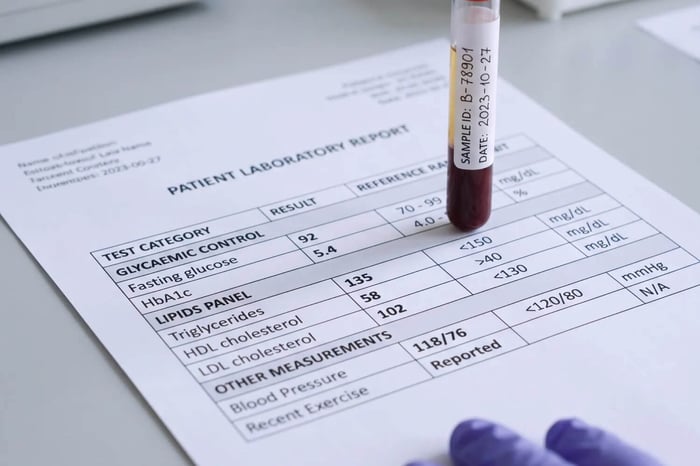
The standard annual cholesterol panel includes your total cholesterol, LDL, HDL, and triglycerides. It's a useful starting point that covers a lot of important information, but it doesn't tell the full story of your cardiovascular health.
People with “normal” cholesterol levels still develop cardiovascular disease, while others with elevated cholesterol never do. That's why more clinicians are looking beyond LDL alone and using additional heart health tests to better understand inflammation, particle number, genetics, and overall cardiovascular risk.
If you've ever walked away from a routine checkup feeling like you got a clean bill of health, only to wonder if there's more to the story, you're not wrong to ask.
Here’s what to ask before your next round of bloodwork.
What Heart Health Tests Are Worth Knowing About?
Most doctors won't automatically order these tests unless they have a specific reason to check a particular biomarker or if your previous results indicate an immediate need for further research. However, if you express an interest in advanced cardiac labs to your doctor, most providers are happy to discuss them. The results can open up a much more useful conversation about where you actually stand.
Some risk factors can be managed by prioritizing positive lifestyle changes , such as incorporating more exercise into your daily routine or switching up your diet. Other risk factors are more difficult to manage, which is why having a fuller picture is crucial.
Standard Lipid Panel
The standard lipid panel is still the foundation of cardiovascular blood testing. It typically includes total cholesterol, LDL cholesterol, HDL cholesterol, and triglycerides. These numbers provide a useful baseline and remain important for evaluating cardiovascular risk.
That said, LDL cholesterol alone doesn't always tell the full story. Some people with “normal” LDL levels still experience cardiovascular disease , while others with elevated LDL may not. That’s because LDL measures the amount of cholesterol being carried , not necessarily the number of particles carrying it.
Your standard lipid panel will always be your starting point. It contextualizes the results of specialized biomarker tests to inform your heart health .
ApoB (Apolipoprotein B)
ApoB is one of the most important advanced cholesterol markers. ApoB measures the actual number of atherogenic lipoprotein particles circulating in the bloodstream, including LDL and VLDL particles.
The thinking here is straightforward: beyond how much cholesterol is in your blood, it’s also about how many particles are repeatedly making contact with your arterial walls over time. More particles means more opportunity for buildup .
The ACC/AHA guidelines recommend ApoB testing for people with high triglycerides, metabolic syndrome, or type 2 diabetes. If any of those apply to you, it's worth bringing up.
Lipoprotein(a)
Lp(a) is a largely genetic cardiovascular risk marker. Unlike cholesterol, you can't really diet or exercise your way to a lower Lp(a). It's largely determined by your genes, which makes testing for it especially useful early.
About 20% of people have elevated Lp(a) , yet many have never been tested. For the first time, the 2026 ACC/AHA guideline recommends that every adult get their Lp(a) measured at least once (Bluementhal et al., 2026: https://www.ahajournals.org/doi/10.1161/CIR.0000000000001423 ).
Elevated Lp(a) does not guarantee cardiovascular disease, but it can provide important context when evaluating overall risk alongside cholesterol, inflammation, and family history.
hs-CRP (High-Sensitivity C-Reactive Protein)
hs-CRP measures chronic low-grade inflammation — and inflammation turns out to be a bigger cardiovascular player than some people realize. hs-CRP isn't ordered for everyone, but the 2026 ACC/AHA guideline treats an elevated hs-CRP as a risk-enhancing factor that can help refine the picture for people at borderline or intermediate risk.
Cardiovascular disease risk extends far beyond cholesterol . Inflammation also contributes to endothelial dysfunction, plaque instability, and vascular stress (none of which show up on a standard cholesterol panel).
Non-HDL Cholesterol
Non-HDL cholesterol is calculated by subtracting HDL from total cholesterol. This represents all atherogenic cholesterol-containing particles.
Many clinicians consider non-HDL cholesterol more reliable than LDL in people with elevated triglycerides or metabolic dysfunction because it offers a broader picture of cardiovascular particle burden.
What Do “Normal” vs. “Optimal” Heart Health Numbers Actually Mean?
One of the biggest misunderstandings in cardiovascular testing is the idea that normal automatically means ideal. It doesn't. Normal just means you're in the middle of the pack — it's a population average rather than a personal guarantee.
The healthiest people may have certain biomarkers at higher or lower than normal levels. Standard lab reference ranges are based on population averages. They’re not necessarily the same thing as ranges associated with the lowest cardiovascular risk.
For example, a result may technically fall within the laboratory’s “normal” range while still being considered suboptimal for someone with a preexisting health condition or a family history of cardiovascular disease.
Numbers shouldn’t be interpreted in isolation. Your healthcare provider may evaluate biomarkers differently depending on the following factors:
Age
Family history
Blood pressure
Smoking status
Metabolic health
Inflammatory markers
Medication use
Existing cardiovascular conditions
The Toku Flow Connection
If you're building a more proactive heart health routine, Toku Flow is designed to fit into that picture. It’s formulated with nattokinase , working to support healthy blood flow and circulation, encourage balanced cholesterol levels, promote arterial flexibility and health, and support healthy blood pressure levels… all things that complement the kind of testing and lifestyle work you're already doing.
Plus, our nattokinase is sourced from chickpeas rather than soy, making our supplement a suitable choice for anyone with soy allergies or other soy dietary restrictions. Our supplement is also third-party tested, delivering 10,800 FU of clinical-grade nattokinase, the dose used in the largest clinical study (most supplements stop around 2,000 FU), per daily sachet, paired with Vitamin K2 (MK-7) and oat beta-glucan for comprehensive cardiovascular support.
Toku Flow is designed to complement your care, not replace your doctor, your labs, or any prescribed treatment plan.
The Bottom Line on Heart Health Tests
Your annual cholesterol panel is a starting point. Biomarkers such as ApoB, Lp(a), hs-CRP, and non-HDL cholesterol may provide deeper insight into cardiovascular risk, inflammation, and particle burden, especially for people with a family history or metabolic risk factors.
The goal isn’t to obsess over every number, but to build a more accurate picture of long-term cardiovascular health with the guidance of your healthcare provider. To support your overall heart health routine , add Toku Flow to your lineup .
FAQs
What is the most important heart health test?
There is no single “best” test. A standard lipid panel remains foundational, but biomarkers like ApoB, Lp(a), hs-CRP, and non-HDL cholesterol may provide additional context.
Should everyone get an ApoB test?
Many clinicians now recommend ApoB testing for people with elevated triglycerides, metabolic syndrome, diabetes, or a family history of cardiovascular disease. Discuss testing with your healthcare provider.
How often should Lp(a) be tested?
Current guidelines generally recommend at least one lifetime Lp(a) test because levels are largely genetically determined.
Is hs-CRP a cholesterol test?
No. hs-CRP measures inflammation rather than cholesterol directly. It is often used alongside lipid markers to better understand cardiovascular risk.
*These statements have not been evaluated by the FDA. This product is not intended to diagnose, treat, cure or prevent any disease. Keep out of reach of children. Consult with your physician before use if you are pregnant, nursing, have a medical condition, or taking anticoagulants. Discontinue use and consult with your health care professional if you experience any adverse reaction to this product.
Sources:
Top 10 Things to Know About the ACC/AHA Cholesterol Guideline | American Heart Association
Apolipoprotein B: Bridging the Gap Between Evidence and Clinical Practice | Circulation
Editorial: Cardiovascular risk and lipoprotein(a): beyond LDL cholesterol |PMC
ACC/AHA Issue Updated Guideline for Managing Lipids, Cholesterol | American College of Cardiology