
Table of Contents
Key Takeaways:
There is no official recommended daily intake of natto. A serving of approximately 40–50 grams is a reasonable dietary portion for many healthy adults.
Natto is particularly rich in vitamin K2 in the form of MK-7.
Eating more natto does not necessarily produce greater health benefits.
Natto and nattokinase supplements are not interchangeable. The amount of nattokinase enzyme obtained from food can vary and cannot be reliably translated into a supplement dose.
People taking warfarin or other medications affected by vitamin K intake should speak with their healthcare provider before adding natto to their diet.
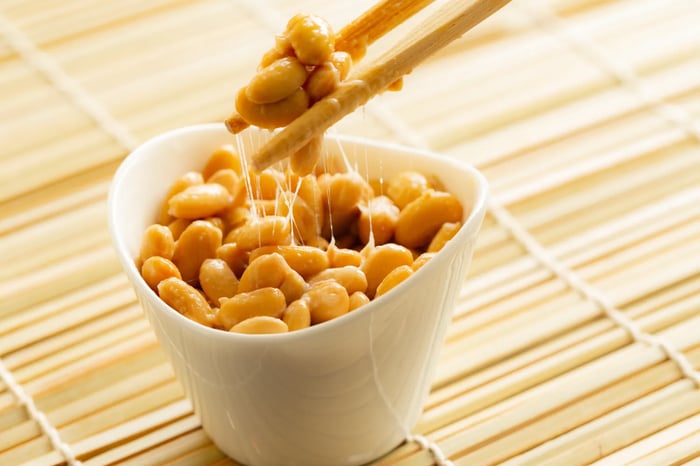
Natto is a traditional Japanese food made from soybeans fermented with a beneficial type of bacteria called Bacillus subtilis. If you've ever tried it, you already know it makes a bit of an impression. Its sticky texture, distinctive aroma, and savory flavor have earned natto a notorious reputation as an acquired taste, but its nutritional profile is so unique that derivatives of natto have become the subject of clinical research.
Natto provides protein, fiber, minerals, fermented soy compounds, and an unusually concentrated amount of menaquinone-7 (MK-7), a form of vitamin K2. Natto is also the food from which the enzyme nattokinase was originally identified, and nattokinase is one of the main reasons many people seek out natto in the first place.
Once you've decided to give natto a try, the natural next question is how much natto to eat per day. It's tempting to assume that if a little is good, more must be better. It isn't. There’s no scientifically established amount of natto that everyone needs to eat each day. For many healthy adults who enjoy it, a practical serving is around 40-50 grams, roughly the amount found in a typical single-serving package of natto. Whether eating natto every day makes sense depends on your overall diet, health, medications, and the reason you are eating it.
What Is a Typical Serving of Natto?
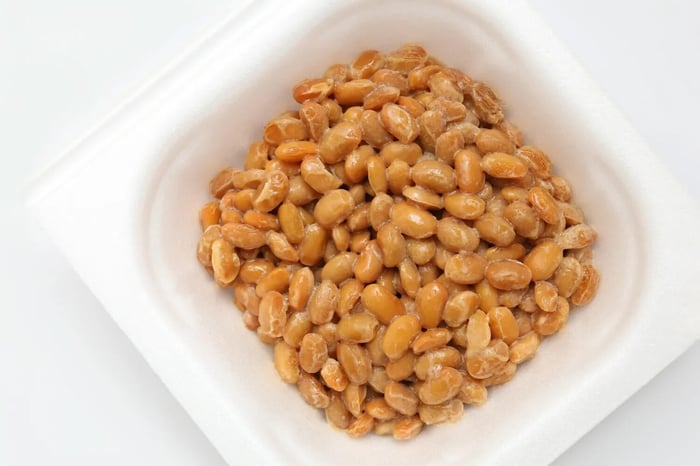
Commercial natto is usually sold in small single-serving containers. Japan treats natto like a grab-and-go food, and you can even find it in the refrigerated section of most convenience stores. Depending on the brand, one package often contains approximately 40-50 grams of fermented soybeans.
Research examining habitual natto consumption has also used different frequencies rather than establishing a required daily serving. One study comparing healthy adults found higher serum MK-7 concentrations among people who ate natto occasionally or several times per week compared with people who did not eat it.
Another study involving premenopausal women compared no natto intake with consumption once per month, once per week, or three times per week over one year. That may sound like researchers are sidestepping the question, but it actually tells you something useful: research on natto does not establish a universal requirement to consume a particular number of grams every day.
In other words, if you're just incorporating fermented foods into a balanced diet, roughly 40-50 grams at a time (whether daily or several times per week) is a realistic starting point rather than an actual medical dosage recommendation. In Japan, natto is often treated as a quick, small meal or a hearty snack.
Why Is Natto Considered So Nutrient-Dense?
Natto begins as soybeans, so it naturally provides plant protein and other nutrients associated with soy foods. Fermentation with beneficial bacteria changes the beans and produces the beneficial compounds found in natto, like menaquinone-7 and nattokinase.
MK-7 is a form of vitamin K2. Vitamin K acts a little bit like an "on" switch, activating proteins involved in normal blood clotting and bone metabolism. Natto contains exceptionally high concentrations of MK-7 compared with most foods. One analysis of fermented foods measured approximately 902 micrograms of MK-7 per 100 grams of natto, while another Japanese food analysis reported approximately 939 micrograms per 100 grams. To put that into perspective, other dietary sources of K2, such as cheese and egg yolks, contain only a small fraction of that amount.
Natto is also notable as the original dietary source of nattokinase, an enzyme produced by Bacillus subtilis during soybean fermentation. Nattokinase was first identified after researchers observed particularly strong fibrinolytic activity in natto. Laboratory and clinical research have since investigated the enzyme for its potential effects on fibrin, circulation, blood pressure, and other aspects of cardiovascular health.
The amount and activity of nattokinase present in natto can vary according to the bacterial strain, fermentation conditions, manufacturing process, and individual product. In other words, no two containers of natto are guaranteed to deliver the same enzyme activity. For this reason, a serving of natto cannot be reliably converted into a standardized nattokinase dose or number of fibrinolytic units (FU).
Can You Eat Natto Every Day?
For many healthy people, natto can be incorporated regularly into a balanced diet. There is, however, no evidence demonstrating that everyone needs to eat it daily. Rather than trying to maximize natto intake, treat it as one part of an overall nutritious diet, not the centerpiece.
How Much Natto Is Too Much?
There is no established upper limit specifically for natto. That does not mean unlimited consumption provides unlimited benefits. Natto is still food, and eating very large amounts can crowd other nutritious foods out of the diet. Individual products may also contain sauces or seasonings that add sodium, sugar, or other ingredients.
Its very high vitamin K2 content is another consideration, particularly for people taking certain medications. MK-7 remains in circulation relatively long compared with vitamin K1; even relatively modest quantities can meaningfully affect vitamin K status. Research comparing forms of vitamin K found that MK-7 accumulated to higher circulating concentrations during continued intake.
For most people, this does not mean natto needs to be avoided. It means there's no reason to assume that eating multiple packages a day is healthier than enjoying one normal serving.
Is Eating Natto the Same as Taking Nattokinase?
No. Natto is a fermented food, while nattokinase is an enzyme originally isolated from natto. It's a bit like the difference between eating an orange and taking a vitamin C tablet. The two are related, but they’re not the same thing. Eating natto provides you with a complex combination of protein, fiber, vitamin K2, fermented soy compounds, microorganisms, and enzymes.
A nattokinase supplement is manufactured to provide a standardized quantity or activity of nattokinase. You cannot reliably say that eating a particular number of grams of natto is equivalent to taking a particular nattokinase supplement.
Clinical studies investigating nattokinase typically use standardized preparations rather than having participants eat natto. For example, one randomized controlled study examining nattokinase and blood-pressure-related outcomes used 100 mg per day of a standardized nattokinase preparation with the vitamin K2 removed.
If someone is interested specifically in nattokinase rather than natto as a food, supplement use should be discussed with a healthcare professional, particularly when anticoagulants, antiplatelet medications, bleeding disorders, or upcoming surgery are involved. If you're specifically seeking the benefits of nattokinase, it's more efficient and reliable to use a nattokinase supplement like Toku Flow.
How To Add Natto to Your Diet
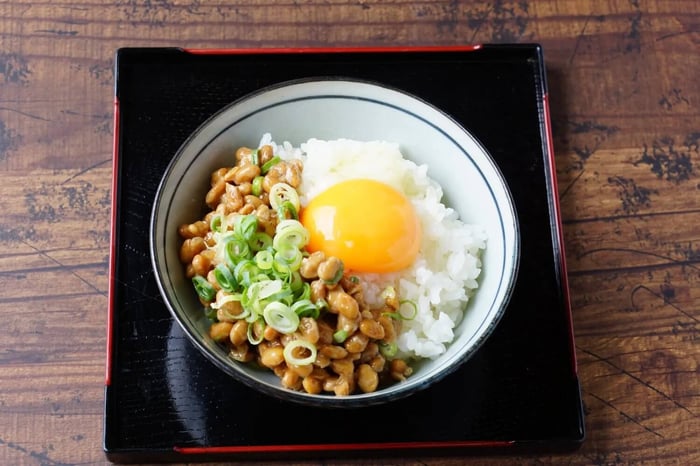
Traditionally, natto is often eaten with rice and seasonings such as mustard or soy-based sauce. That said, its intense aroma and stringy texture can be challenging for first-time eaters, so starting with a smaller portion may make it easier to incorporate. Natto can also be combined with rice bowls, eggs, vegetables, scallions, seaweed, or other savory foods. Because it already has a strong flavor, relatively small portions can add considerable character to a meal.
Natto can be polarizing, and it's okay if you don't like it. If you're only interested in the potential benefits of natto-specific enzymes and vitamins, you can always opt for Toku Flow instead. You'll get a reliable, clinically relevant dose of nattokinase without having to eat something you don't particularly enjoy.
So, How Much Natto Should You Eat?
There isn't a single scientifically established daily dose of natto. For a healthy adult who wants to include natto as part of a balanced diet, approximately 40-50 grams (or roughly one typical single-serving package) is a practical portion. If you enjoy it, eating it daily is perfectly reasonable. If you don't, that's fine too, because natto isn't the only way to get nattokinase.
If your interest is specifically in nattokinase, remember that natto and a nattokinase supplement are not equivalent, and a standardized supplement is the more predictable route.
People taking warfarin or other medications that may be affected by vitamin K, clotting, or fibrinolytic activity should speak with their healthcare provider before substantially increasing natto consumption or using a nattokinase supplement.
FAQs
Is it okay to eat natto every day?
For many healthy adults, eating one serving of natto daily can fit into a balanced diet. However, there's no evidence that daily intake is necessary. Eating it several times per week is also a reasonable approach. People taking warfarin or other vitamin K–sensitive medications should talk with their healthcare provider first.
How many packs of natto should you eat per day?
One single-serving package, typically about 40-50 grams, is a practical daily portion for most healthy adults. Eating multiple packs per day isn't necessarily healthier. It can add a large amount of vitamin K2, and the included sauces add sodium.
How much vitamin K2 is in one serving of natto?
Natto contains roughly 900-940 micrograms of MK-7 per 100 grams, according to published food analyses. That means a typical 40-50 gram package may provide approximately 360–470 micrograms of vitamin K2. Actual amounts vary by brand and fermentation method.
How much protein is in natto?
Natto provides roughly 17-19 grams of protein per 100 grams, depending on the product. A standard single-serving package supplies about 7-9 grams of plant-based protein, along with fiber, iron, and other minerals naturally found in soybeans.
Does cooking natto destroy nattokinase?
Nattokinase is an enzyme, and enzymes can lose activity when exposed to high heat. Natto is traditionally eaten cold or at room temperature, often over warm rice. Adding it to dishes after cooking, rather than heating it directly, may help preserve its enzyme content.
*The information provided in this article is for educational and informational purposes only and is not intended as health or medical advice. Always consult a physician or other qualified health provider regarding any questions you may have about a medical condition or health objectives. This content has not been evaluated by the Food and Drug Administration and is not intended to diagnose, treat, cure, or prevent any disease.
Sources:
Promotion of bone formation by fermented soybean (Natto) intake in premenopausal women | PubMed
Determination of vitamin K composition of fermented food | PubMed