
Table of Contents
Key Takeaways:
- Natto is the #1 food source of vitamin K2, at roughly 1,000 mcg per 100 grams. NIH's Office of Dietary Supplements lists 850 mcg in a single 3-ounce serving.
- The form matters. Natto's K2 is MK-7, which stays in circulation for days. Most animal foods carry MK-4, which was undetectable in blood after a nutritional-scale dose in a head-to-head study.
- Everyday foods provide modest amounts. Hard cheeses reach about 40-80 mcg per 100 g, butter about 15-21 mcg, and two egg yolks only about 5-10 mcg combined.
- Two viral claims fail the check: apple cider vinegar contains zero vitamin K2 per USDA data, and the "32-67 mcg per egg yolk" figure on supplement blogs misreads per-100-gram data as per-yolk.
Natto, the Japanese fermented soybean dish, is the richest known food source of vitamin K2 by a wide margin: roughly 1,000 mcg per 100 grams, all in the highly bioavailable MK-7 form. The next-closest food, goose liver, provides about a third of that, and everyday Western foods like cheese, chicken, butter, and eggs trail far behind. This guide ranks the top K2 foods, explains why the form of K2 (MK-4 vs MK-7) matters as much as the amount, and covers what a realistic diet actually delivers.
Which Food Is Highest in Vitamin K2?
Natto tops every published food ranking for vitamin K2. Analyses cluster around 1,000 mcg per 100 grams (a landmark Schurgers and Vermeer analysis measured 998 mcg, with other analyses ranging from about 775 to 1,100), and the NIH Office of Dietary Supplements lists 850 mcg per 3-ounce serving. No other food comes close.
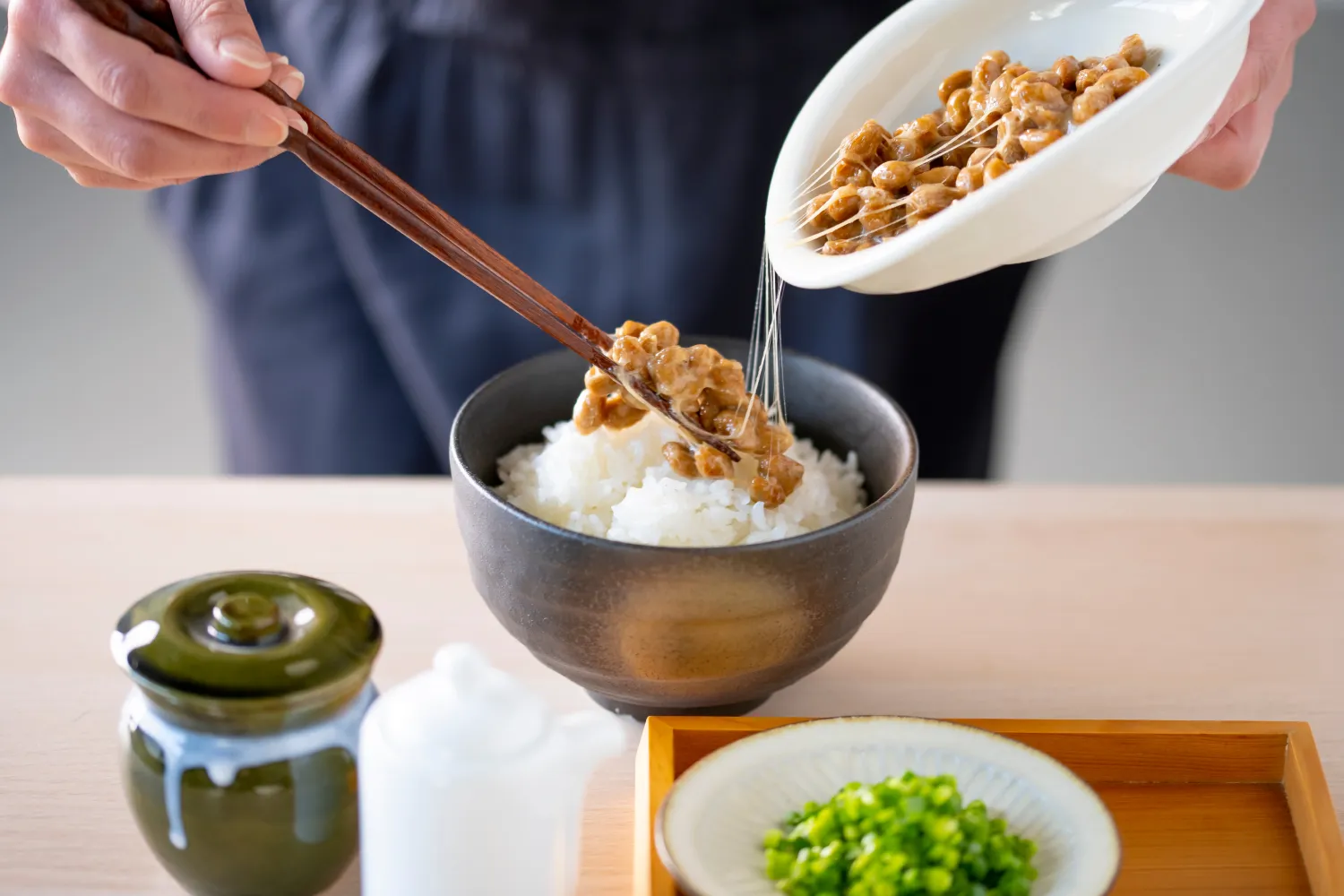
Natto earns that outlier status through fermentation. Steamed soybeans are fermented with the bacterium Bacillus subtilis var. natto, which produces menaquinone-7 (MK-7) during fermentation. That makes natto the answer to two questions at once: it is both the highest-K2 food overall and the standout fermented source.
Which Foods Have the Most Vitamin K2?
Here are the top food sources of vitamin K2, ranked by amount per 100 grams, with the K2 form each one carries. Values are ranges because published analyses vary by product, region, and (for animal foods) the animal's diet.
Rank | Food | K2 per 100 g (approx.) | K2 form |
1 | Natto | ~1,000 mcg (analyses range ~775-1,100) | MK-7 |
2 | Goose liver | ~369 mcg | MK-4 |
3 | Hard cheeses (Gouda, Edam, Jarlsberg) | ~40-80 mcg (Jarlsberg ~73) | MK-8/MK-9 |
4 | Soft cheese | ~40 mcg | MK-9 |
5 | Chicken dark meat | ~25-36 mcg | MK-4 |
6 | Butter | ~15-21 mcg | MK-4 |
7 | Egg yolk | ~8-32 mcg (varies by hen diet) | MK-4 |
8 | Sauerkraut | ~1-5 mcg | mixed menaquinones |
Two patterns stand out in this table. First, the drop-off after natto is steep: the #2 food has roughly a third of natto's K2, and everything from #3 down sits at less than a tenth. Second, the forms split cleanly by food type. Fermented soy delivers MK-7, dairy fermentation yields MK-8 and MK-9, and animal tissues (liver, dark meat, butter, egg yolk) carry MK-4. That split matters more than most food lists acknowledge, as the next section explains.
MK-4 vs. MK-7: Does the Form of K2 Matter?
Yes, and the difference shows up directly in blood measurements. In a 2012 study published in Nutrition Journal (Sato, Schurgers, and Uenishi), healthy women took a single nutritional-scale dose of either MK-4 or MK-7. The MK-7 was well absorbed: serum levels peaked at six hours and remained detectable at 48 hours. The same-scale dose of MK-4 was undetectable in serum at all measured time points. In a follow-up arm, seven days of MK-4 at 60 mcg per day still did not raise serum levels, while MK-7 raised them in every subject.
The practical takeaway is that MK-7 persists. Its half-life is around three days (roughly 68 hours), compared with hours for vitamin K1 and MK-4. That long half-life is why moderate daily MK-7 intake can build steady blood levels, and it is part of why natto ranks as impressively as it does: it delivers the largest amount of K2 in the longest-lasting form.
One caveat keeps this honest: pharmacological MK-4 is a different story. Japan prescribes MK-4 as a drug at 45 mg per day (a dose roughly a thousand times the nutritional scale), and at that level, it is absorbed and biologically active. The Sato findings apply to the amounts you could plausibly get from food or standard supplements, not to prescription dosing.
Can You Get Enough Vitamin K2 From Food Alone?
You can, but for most people eating a Western diet, it’s harder than the ranked list makes it look. The two top foods are the problem: natto is a strong acquired taste that few Americans eat regularly, and goose liver is not exactly a weeknight staple. That leaves the foods most people actually eat, and the math there is modest. A serving of hard cheese, some chicken thigh, butter, and a couple of eggs each contribute single- or low-double-digit mcg, mostly as short-lived MK-4 rather than persistent MK-7.
For reference, the adequate intake of total vitamin K is 120 mcg per day for men and 90 mcg per day for women. Dietary guidelines set that number with K1 in mind, and there’s no separate K2 target, but it gives a sense of scale: a typical day of Western eating provides a small fraction of it as K2, and almost none as MK-7.
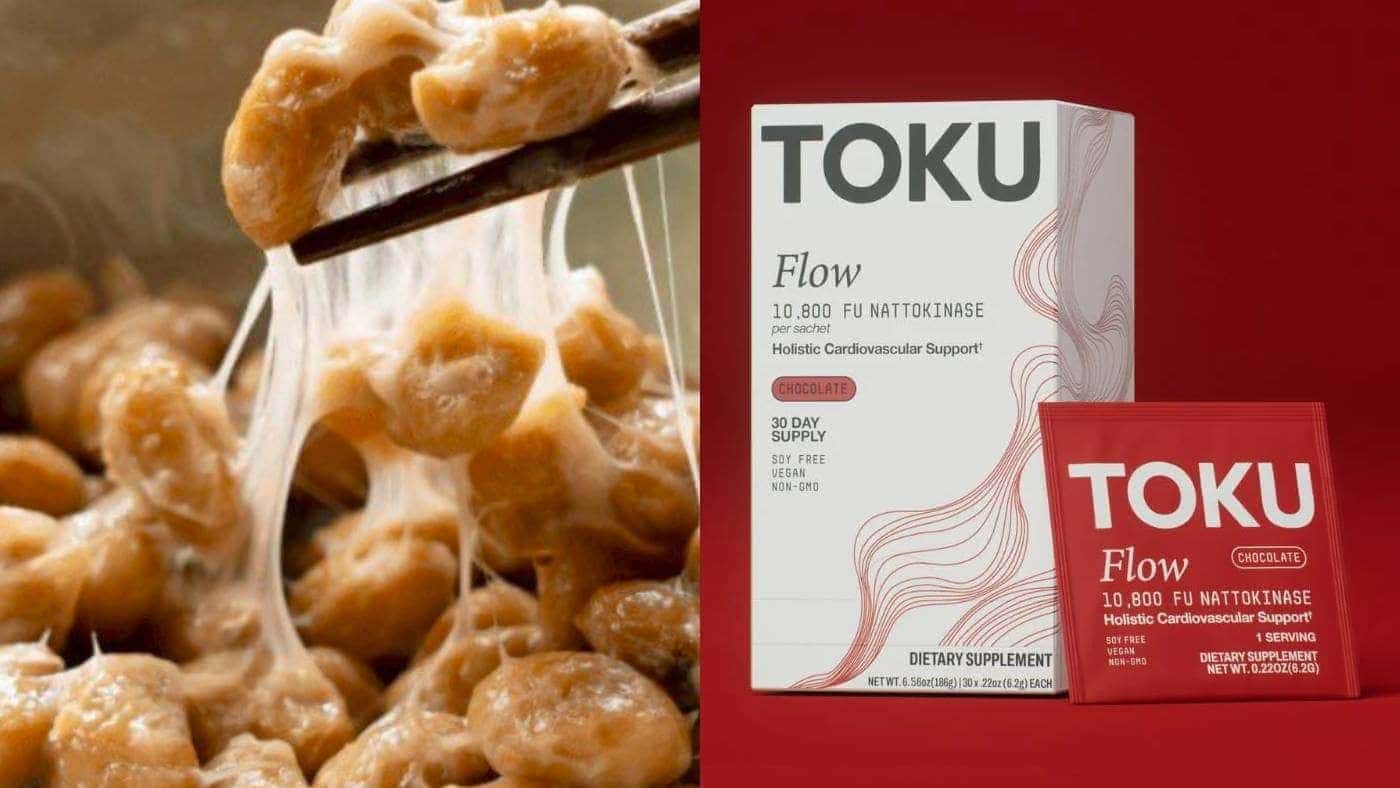
If natto is not going to become a habit, the practical options are to add fermented foods and K2-rich foods you genuinely enjoy, or to cover the MK-7 gap with a supplement. That is the approach we took with Toku Flow, which pairs 10,800 FU of nattokinase with 180 mcg of vitamin K2 as MK-7, the same form natto provides, in one daily powder.
If you take warfarin or another anticoagulant, talk to your physician before changing your vitamin K intake from food or supplements. Consistency of intake is the clinical rule.
K2 Food Myths Worth Checking
Two claims about K2 foods circulate widely enough to deserve a direct correction.
Myth 1: Apple cider vinegar is a fermented source of K2. It is not. USDA data list 0 mcg of vitamin K per 100 grams of apple cider vinegar, and its overall micronutrient content is negligible. The confusion comes from lumping all "fermented foods" together. ACV fermentation runs on yeast and acetic acid bacteria, which do not produce K2. Natto's fermentation runs on Bacillus subtilis, which does. Fermentation alone tells you nothing about K2; the microbe doing the fermenting is what matters.
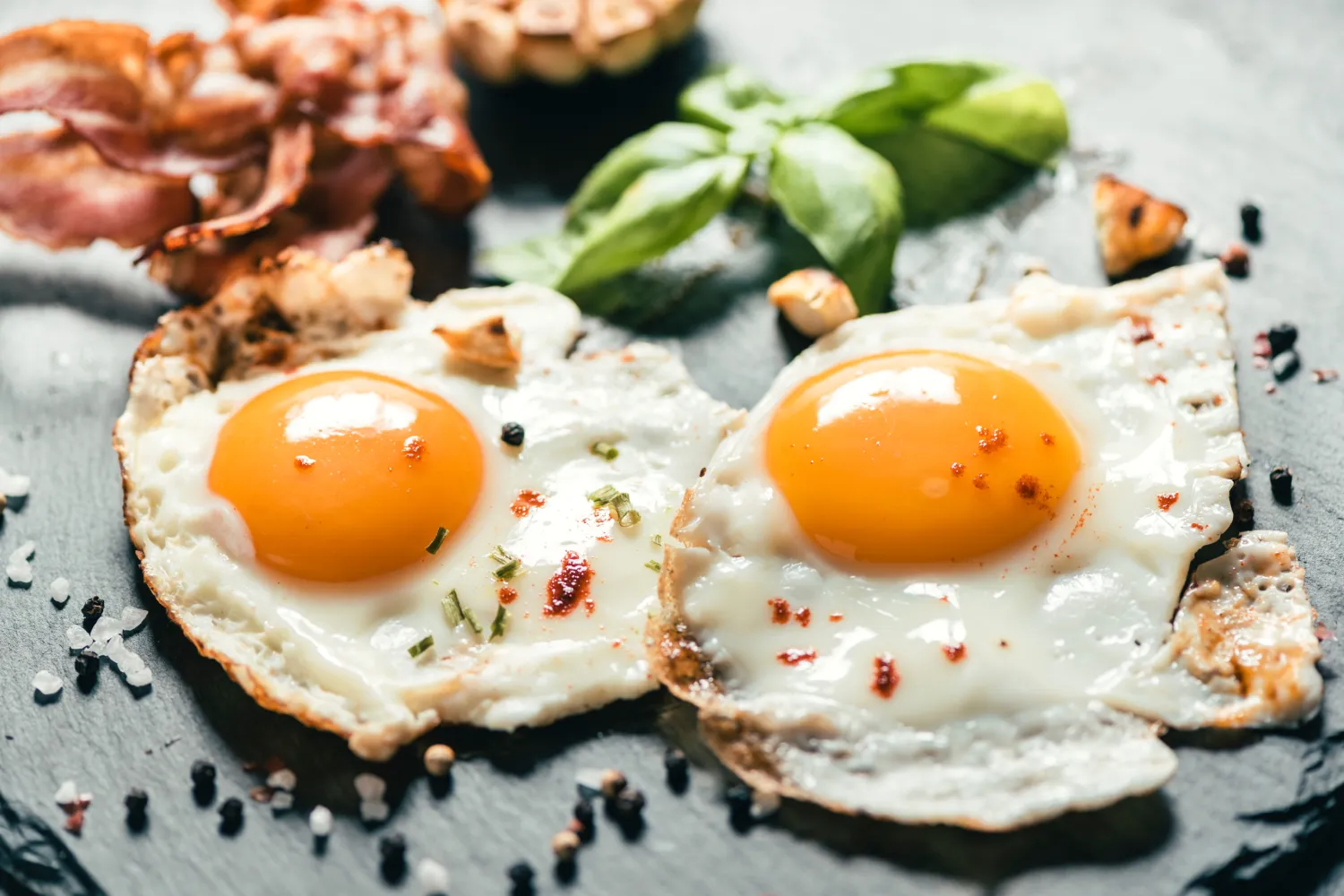
Myth 2: One egg yolk has 32-67 mcg of K2. This figure, repeated across supplement-brand blogs, misreads per-100-gram data as per-yolk data. Published analyses put egg yolk at roughly 8-32 mcg per 100 grams, depending on the hens' diet. One large yolk weighs about 17 grams, so a single yolk provides roughly 2-5 mcg, not 32-67. The circulating numbers are inflated about sixfold.
Parting Thoughts
If you want vitamin K2 from food, the ranking is clear: natto first by an order of magnitude, then goose liver, then fermented cheeses, with everything else contributing small amounts of short-lived MK-4. Eat the foods on this list that you actually enjoy, be skeptical of K2 claims that skip the form and the serving math, and if MK-7 is the gap in your diet, cover it deliberately rather than assuming eggs and butter add up.
FAQs
What is the #1 food highest in vitamin K2?
Natto, the Japanese fermented soybean dish, is the #1 food source of vitamin K2, providing roughly 1,000 mcg per 100 grams in the MK-7 form. The NIH Office of Dietary Supplements lists 850 mcg per 3-ounce serving. The next-richest food, goose liver, provides around 369 mcg per 100 grams, while common foods like cheese, chicken, and eggs provide far less.
Which fermented food has vitamin K2?
Natto is the standout fermented source of vitamin K2 because its fermenting bacterium, Bacillus subtilis, produces MK-7 directly. Fermented cheeses also contain meaningful K2 (mostly MK-8 and MK-9, with hard cheeses around 40-80 mcg per 100 grams). Not all fermented foods qualify: sauerkraut contains only about 1-5 mcg per 100 grams, and apple cider vinegar contains none, because their fermenting microbes do not produce K2.
How much K2 is in 2 eggs?
Roughly 5-10 mcg, as an approximate estimate. Published analyses put egg yolk at about 8-32 mcg of MK-4 per 100 grams, depending on the hens' diet, and one large yolk weighs about 17 grams, which works out to roughly 2-5 mcg per egg. That is a small fraction of the 90-120 mcg daily adequate intake for vitamin K, and hundreds of times less than a serving of natto.
Does apple cider vinegar have vitamin K2?
No. USDA data lists 0 mcg of vitamin K per 100 grams of apple cider vinegar. ACV is fermented by yeast and acetic acid bacteria, neither of which produces vitamin K2. K2-producing fermentation requires specific bacteria, such as the Bacillus subtilis used to make natto.
*The information provided in this article is for educational and informational purposes only and is not intended as health or medical advice. Always consult a physician or other qualified health provider regarding any questions you may have about a medical condition or health objectives. This content has not been evaluated by the Food and Drug Administration and is not intended to diagnose, treat, cure, or prevent any disease.
Sources:
- NIH Office of Dietary Supplements, Vitamin K Fact Sheet for Health Professionals: https://ods.od.nih.gov/factsheets/VitaminK-HealthProfessional/
- Schurgers LJ, Vermeer C. Determination of phylloquinone and menaquinones in food. Haemostasis, 2000. https://pubmed.ncbi.nlm.nih.gov/11356998/
- Elder SJ et al. J Agric Food Chem, 2006 (menaquinone content of foods). https://www.ars.usda.gov/ARSUserFiles/80400525/articles/jafc54_463-467.pdf
- Zhou et al., 2022 dairy K2 review: https://onlinelibrary.wiley.com/doi/10.1111/1471-0307.12901
- Sato T, Schurgers LJ, Uenishi K. Comparison of menaquinone-4 and menaquinone-7 bioavailability in healthy women. Nutrition Journal, 2012: https://www.ncbi.nlm.nih.gov/pmc/articles/PMC3502319/ (PubMed: https://pubmed.ncbi.nlm.nih.gov/23140417/)
- USDA FoodData Central, apple cider vinegar (0 mcg vitamin K per 100 g): https://tools.myfooddata.com/nutrition-facts/173469/wt1
- Egg yolk K2 and biofortification context: https://www.ncbi.nlm.nih.gov/pmc/articles/PMC7694954/
- Referenced secondary compilation: https://www.nutritionadvance.com/foods-high-in-vitamin-k2/