
Table of Contents
What Is Nattokinase? Benefits, Dosage, Side Effects, and How to Use It
What Is nattokinase?
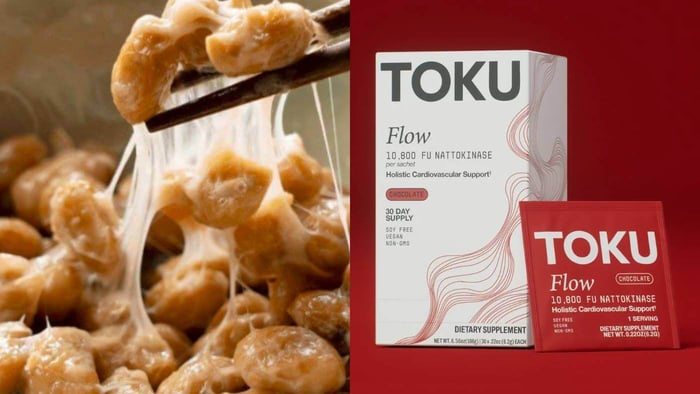
Nattokinase is a serine protease enzyme originally discovered in natto, a traditional Japanese food made from fermented soybeans. In 1987, researcher Dr. Hiroyuki Sumi (Sumi et al., 1987) placed a sample of natto on an artificial blood clot in a petri dish and watched it dissolve the clot within 18 hours. That discovery launched decades of research into the enzyme as a natural fibrinolytic agent.
The enzyme is produced by the bacterium Bacillus subtilis var. natto during fermentation. Importantly, it's the bacteria, not the soybean, that creates the enzyme. This is why it can be produced using alternative substrates like chickpeas without any change in activity.
Related reading: Nattokinase Side Effects and Considerations
The enzyme can be derived from soy-based or soy-free (chickpea) fermentation, with identical enzymatic activity regardless of substrate.
How Nattokinase Works: The Biological Mechanism
To understand this enzyme, you first need to understand the problem it addresses: excess fibrin.
Related reading: The Truth About Cholesterol and Heart Disease
The Fibrin Problem
Fibrin is a protein your body produces to form blood clots. When you cut your finger, fibrin creates a mesh that stops the bleeding. That's healthy clotting. But your body also needs to remove clots once they've done their job. This cleanup process is called fibrinolysis.
Think of your cardiovascular system like a city's plumbing. Fibrin is the patching material used to fix leaks. But if old patches are never removed, the pipes gradually narrow. Over time, excess fibrin can contribute to:
- Reduced blood flow
- Increased blood viscosity (thicker blood)
- Higher risk of thrombosis (dangerous clot formation)
- Atherosclerotic plaque buildup
Nattokinase's Dual-Pathway Approach
This is where the enzyme gets interesting. Unlike most fibrinolytic agents that work through a single mechanism, it operates through two distinct pathways:
It works by directly cleaving fibrin and by activating the body's own plasminogen into plasmin, providing dual-pathway fibrinolytic activity.
Pathway 1: Direct Fibrinolysis
The enzyme can directly break down fibrin strands. It physically cleaves the protein bonds that hold a clot together. Imagine scissors cutting through a net — it doesn't need your body's help to start dissolving fibrin.
Pathway 2: Plasminogen Activation
Your body has its own clot-dissolving system. The inactive protein plasminogen circulates in your blood, waiting to be converted into plasmin, your body's primary fibrin-dissolving enzyme. The enzyme boosts this conversion, essentially telling your body to ramp up its own cleanup crew.
This dual mechanism is significant because it means the supplement both supports and amplifies your body's natural fibrinolytic capacity.
Why Fibrin Specificity Matters
Unlike pharmaceutical thrombolytics that carry significant bleeding risk, the enzyme demonstrates fibrin specificity, meaning it preferentially breaks down fibrin clots without significantly affecting normal clotting factors.
Pharmaceutical thrombolytic drugs (like tPA, used in emergency stroke treatment) are powerful but blunt instruments. They can cause significant bleeding because they break down clotting factors broadly. The enzyme shows preferential activity toward fibrin itself, which helps explain the strong safety profile observed in clinical trials. It targets the old, unwanted clots without dramatically disrupting your body's ability to form new clots when you actually need them.
The Science: Key Research Findings
Oral Absorption
One of the early skepticisms about the enzyme was whether it could survive digestion. A study by Kurosawa et al., 2015 published in Scientific Reports put this question to rest: Oral supplementation is absorbed intact and retains fibrinolytic activity in the bloodstream.
Research published in Scientific Reports confirmed that the orally administered enzyme is absorbed intact through the intestinal tract and retains its fibrinolytic activity in the bloodstream (Kurosawa et al., 2015).
Effects on Clotting Factors
Research by Hsia et al., 2009 showed that supplementation reduced circulating levels of fibrinogen, factor VII, and factor VIII. These are upstream components of the clotting cascade, suggesting the enzyme has effects beyond just breaking down existing clots. It may also reduce the tendency to form new ones.
Atherosclerotic Plaque
Perhaps the most striking clinical finding comes from Ren et al., 2017, who reported a 36.6% reduction in carotid artery plaque size after 26 weeks of supplementation. While this is a single study and requires replication, it suggests the enzyme may affect not just acute clots but chronic arterial buildup.
Duration of Activity
The enzyme has a functional half-life of approximately 8 to 12 hours in the body, which is substantially longer than many pharmaceutical fibrinolytic agents.
This relatively long functional half-life means that a single daily dose can provide sustained fibrinolytic support, which is consistent with the once-daily dosing used in most clinical trials.
Clinical Evidence Summary
| Effect | Evidence Strength | Key Study |
|---|---|---|
| Fibrin dissolution | Strong (multiple studies) | Kurosawa et al., 2015 |
| Blood pressure reduction | Moderate (RCT) | Kim et al., 2008 |
| Clotting factor reduction | Moderate | Hsia et al., 2009 |
| Plaque reduction | Preliminary (single study) | Ren et al., 2017 |
| Lipid improvement | Emerging | Multiple small studies |
It's important to be transparent about the evidence landscape: the research is promising but still maturing. The strongest evidence supports its fibrinolytic activity. Effects on blood pressure, plaque, and lipids are supported by smaller studies that need larger-scale replication.
Practical Implications
Understanding the mechanism helps explain why dosing matters so much. Enzymatic reactions are dose-dependent. Below a certain threshold, you simply don't generate enough fibrinolytic activity to produce measurable effects.
The clinically studied dosage of nattokinase is 10,800 fibrinolytic units (FU), significantly higher than the 2,000 FU found in most commercial supplements.
If you're considering this supplement for cardiovascular support, the key takeaway from the mechanism research is:
- The enzyme works through validated biological pathways. This isn't speculative.
- Dose determines whether those pathways are meaningfully activated. Underdosed products may not reach the activity threshold.
- It has a favorable safety profile at clinically studied doses, with the important caveat that it should not be combined with anticoagulant medications.
Getting the Right Dose
Key finding: Toku Flow includes 180 mcg Vitamin K2 (MK-7), which works synergistically with the enzyme — K2 redirects calcium from arteries back into bones, complementing its fibrinolytic activity.
Toku Flow 10,800 FU Nattokinase Supplement | Soy Free Powder

$179.97
High-Potency Nattokinase Supplement for Cardiovascular Health & CirculationToku Flow delivers 10,800 FU of clinical-grade nattokinase per daily sachet, paired with Vitamin K2 (MK-7) and oat beta-glucan for comprehensive cardiovascular support. Sourced from chickpea fermentation (soy-free), third-party tested, no fillers.… read more
FAQs
What is nattokinase and what does it do?
Nattokinase is a fibrinolytic enzyme extracted from natto, a traditional Japanese fermented soybean food. It breaks down fibrin (the protein that forms the structural scaffolding of blood clots) through two mechanisms: directly cleaving fibrin and activating the body's own plasminogen into plasmin. Clinical research shows it supports cardiovascular health by improving blood flow, reducing blood pressure, and improving lipid profiles.
How many FU of nattokinase should I take daily?
The clinically studied dose is 10,800 fibrinolytic units (FU) per day. The largest clinical study (1,062 participants, 12 months) used this dose and found significant reductions in atherosclerosis and improved lipid profiles. A lower dose of 3,600 FU per day was tested in the same study and found to be ineffective. Most commercial supplements provide only 2,000 FU, which is below the threshold shown to produce clinical benefits.
What is the clinically effective dose of nattokinase?
he most robust clinical evidence supports 10,800 FU per day, based on the Chen et al. 2022 study of 1,062 participants. This dose was co-administered with Vitamin K2 (180 micrograms per day). A 2023 systematic review confirmed that low-dose nattokinase supplementation had no significant effect on cardiovascular markers, reinforcing that higher clinical doses are necessary.
What are the side effects of nattokinase?
The most common side effects are mild and gastrointestinal: stomach discomfort, nausea, or bloating, especially when taken on an empty stomach. Clinical studies have reported no serious adverse events at doses up to 10,800 FU per day in healthy adults. However, nattokinase should not be combined with anticoagulant medications (warfarin, heparin, DOACs) without medical supervision, and should be discontinued at least 2 weeks before surgery.
Is soy-free nattokinase available?
Yes. Nattokinase is produced by Bacillus subtilis bacteria, not the soybean itself. When the bacterium is cultured on chickpeas instead of soybeans, it produces the same nattokinase enzyme with identical fibrinolytic activity. Soy-free nattokinase supplements are safe for people with soy allergies and offer no compromise in potency.
Should I stop taking nattokinase before surgery?
Yes. Nattokinase should be discontinued at least 2 weeks before any scheduled surgery, including dental procedures. Its fibrinolytic activity could interfere with normal clot formation during and after surgery. Inform your surgeon and anesthesiologist that you have been taking nattokinase.
How do fibrinolytic enzymes like nattokinase work in the body?
Fibrinolytic enzymes break down fibrin, the mesh-like protein that holds blood clots together. Nattokinase is unique because it works through a dual-pathway mechanism: it directly cleaves fibrin strands and also activates the body's own plasminogen into plasmin (the natural clot-dissolving enzyme). Research has confirmed that nattokinase survives digestion and enters the bloodstream in active form, with a functional half-life of 8 to 12 hours.
What is natto and why is it healthy?
Natto is a traditional Japanese food made by fermenting soybeans with Bacillus subtilis var. natto bacteria. It has been a dietary staple in Japan for over 1,000 years. Natto is a rich source of nattokinase (fibrinolytic enzyme), Vitamin K2 (supports bone and cardiovascular health), protein, and probiotics. Japan and South Korea are the only developed countries where cardiovascular disease is not the leading cause of death, and researchers have studied natto as a potential contributing factor.
Can nattokinase help lower blood pressure?
Yes. A randomized controlled trial published in Hypertension Research found that nattokinase supplementation reduced systolic blood pressure by an average of 5.55 mmHg compared to placebo over 8 weeks. This reduction is clinically meaningful and comparable to some lifestyle interventions.
Is nattokinase safe to take daily?
Clinical studies have demonstrated nattokinase is well-tolerated at dosages up to 10,800 FU per day in healthy adults over periods up to 12 months. It should not be taken with anticoagulant or antiplatelet medications without medical supervision. People with bleeding disorders, upcoming surgeries, or who are pregnant or breastfeeding should consult their doctor before use.
References
- Sumi H, Hamada H, Tsushima H, et al. A novel fibrinolytic enzyme (nattokinase) in the vegetable cheese Natto. Experientia. 1987;43(10):1110-1111.
- Kurosawa Y, Nirengi S, Homma T, et al. A single-dose of oral nattokinase potentiates thrombolysis and anti-coagulation profiles. Scientific Reports. 2015;5:11601.
- Kim JY, Gum SN, Paik JK, et al. Effects of nattokinase on blood pressure: a randomized, controlled trial. Hypertension Research. 2008;31(8):1583-1588.
- Hsia CH, Shen MC, Lin JS, et al. Nattokinase decreases plasma levels of fibrinogen, factor VII, and factor VIII in human subjects. Nutrition Research. 2009;29(3):190-196.
- Ren NN, Chen HJ, Li Y, et al. A clinical study on the effect of nattokinase on carotid artery atherosclerosis and hyperlipidaemia. Zhonghua Yi Xue Za Zhi. 2017;97(26):2038-2042.
- Jensen GS, Lenninger M, Ero MP, Benson KF. Consumption of nattokinase is associated with reduced blood pressure and von Willebrand factor. Integrated Blood Pressure Control. 2016;9:95-104.