
Key Takeaways:
Chronic low-grade inflammation is strongly associated with cardiovascular disease and atherosclerosis.
Researchers are studying nattokinase for more than fibrinolysis alone, including possible anti-inflammatory and antioxidant mechanisms.
Some preclinical studies suggest nattokinase may influence pathways involved in vascular inflammation. Human research on the mechanisms of nattokinase-induced inflammation is ongoing, but findings show promise.
Chronic inflammation has become one of the most important topics in cardiovascular research over the last two decades. Scientists no longer view inflammation as just a byproduct of heart disease. Instead, inflammation is now seen as part of the engine that drives many heart health concerns.
Researchers are looking more closely at compounds that may influence inflammation-related pathways, including nattokinase. Best known for its fibrinolytic activity, nattokinase is now being studied for potential effects on vascular inflammation, oxidative stress, and endothelial function.
What Is the Inflammation-Cardiovascular Connection?
When you think about inflammation, you might be picturing skin redness or post-workout soreness. Cardiovascular inflammation is different. It’s usually low-grade, systemic, and largely invisible. Unlike inflammation of the skin or inflammation of exterior muscles, it may not be obvious that you're dealing with cardiovascular inflammation.
Over time, chronic vascular inflammation may contribute to damage inside blood vessel walls. That damage can influence plaque formation, plaque instability, and clotting activity. Atherosclerosis has largely been seen as an issue stemming from cholesterol storage, but research now suggests that it may be more of an inflammatory process.
This is one reason biomarkers like hs-CRP, or high-sensitivity C-reactive protein, receive so much attention in cardiovascular research. Elevated hs-CRP levels are associated with increased cardiovascular risk independent of cholesterol measurements alone.
Cholesterol will always be important, but the biological environment surrounding cholesterol particles can be equally important. Inflammation, oxidative stress, endothelial dysfunction, and coagulation pathways all interact to form a comprehensive picture of your cardiovascular health.
What Is Nattokinase?
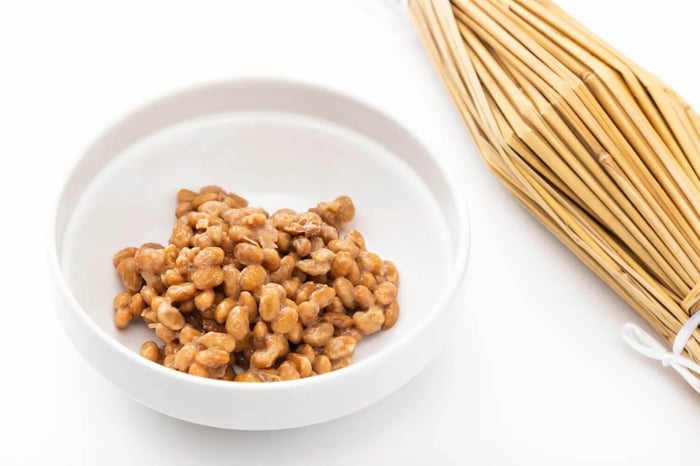
Nattokinase is an enzyme derived from natto, a traditional Japanese fermented soybean food made using Bacillus subtilis. Like other fermented foods (yogurt, kimchi, sauerkraut), natto has a history rooted in gut health, but the enzyme it produces appears to interact with the body in ways that go well beyond digestion.
Nattokinase has been studied primarily for its fibrinolytic properties, meaning its ability to interact with pathways involved in fibrin breakdown. The clinically studied dose is 10,800 FU, from the largest trial of 1,062 participants (Chen et al., 2022: https://doi.org/10.3389/fcvm.2022.964977), where a lower 3,600 FU dose didn't work. Toku Flow contains 10,800 FU to follow the science.
Fibrin is a protein involved in blood clot formation. Nattokinase has attracted significant research interest for its promising potential in holistic cardiovascular wellness management, as it helps break down fibrin, the protein that holds clots together.
More recently, scientists have begun investigating whether nattokinase may also influence inflammatory signaling and oxidative stress pathways connected to vascular health.
To be clear: that doesn't make it an anti-inflammatory drug or a blood thinner. It means researchers are exploring whether it may support the body's own natural regulatory functions, which is a meaningfully different claim.
What Does the Research Say About Nattokinase and Inflammation?
Early nattokinase research investigating its ability to support a healthy inflammatory response suggests that its further implications may be worth exploring. Most of this evidence comes from laboratory and animal models. Human randomized controlled trials remain limited. Findings show great promise in early stages.
Potentially Broad Benefits
One review examined nattokinase’s broader biological activity beyond fibrinolysis . Researchers discussed evidence suggesting fibrinolytic, antithrombotic, antioxidant, and anti-inflammatory effects, particularly in the context of non-communicable diseases like cardiovascular disease.
The review proposed that nattokinase may act through multiple pathways simultaneously rather than through one isolated mechanism. That is important because cardiovascular disease is not caused by a single process. Lipid metabolism , inflammation, endothelial function, coagulation activity, and oxidative stress all overlap.
Nattokinase and Endothelial Cells
One of the more interesting areas of current research involves endothelial cells, the cells lining blood vessels. Healthy endothelial function helps regulate circulation, vascular tone, and inflammatory signaling.
A 2024 laboratory study found that nattokinase may attenuate endothelial inflammation via SRF and THBS1 signaling (Chiu et al., 2024: https://doi.org/10.1016/j.ijbiomac.2024.131779 ). These are cellular signaling mechanisms involved in vascular remodeling and inflammatory responses.
Researchers are investigating whether nattokinase may influence the biological environment within blood vessels beyond clot-related mechanisms.
NF-kB Signaling
Inflammation research often focuses on a signaling pathway called NF-kB. NF-kB acts as a near-master switch for inflammatory gene expression. When activated chronically, it may contribute to inflammatory signaling, oxidative stress, and coagulation-related processes.
Several preclinical animal studies suggest nattokinase may inhibit NF-kB pathway activation under certain experimental conditions (Wu et al., 2010: https://doi.org/10.1016/j.redox.2020.101500 ).
Nattokinase and Dyslipidemia
A currently registered randomized controlled trial is evaluating nattokinase’s effects on inflammatory markers in patients with dyslipidemia.
Human data is still limited, so ongoing trials like this help researchers move beyond mechanistic theories and better understand how nattokinase may influence real-world cardiovascular and inflammatory biomarkers. Results are still pending.
The Toku Flow Connection
If you've been following the nattokinase research and wondering where supplementation fits in, that's the right instinct, with the right caveats.
Toku Flow contains nattokinase and is formulated to support overall cardiovascular wellness. It’s built to complement your overall wellness routine and daily habits, and it’s not a treatment for inflammation or any related condition. Speak with your doctor before supplementing, especially if you’re managing an inflammatory or cardiovascular condition or taking anticoagulant medication.
The Bottom Line on Nattokinase and Inflammation
The science is still developing, and large human clinical trials remain limited. For now, the most evidence-based approach is to view nattokinase as one piece of a larger cardiovascular wellness conversation rather than a standalone solution.
Always work with a qualified healthcare provider when evaluating supplements, biomarkers, and cardiovascular risk strategies.
FAQs
Is nattokinase considered an anti-inflammatory?
Research suggests nattokinase may influence inflammatory pathways, but it is not classified as an anti-inflammatory medication. Most evidence is still preclinical or mechanistic.
Can nattokinase reduce cardiovascular inflammation?
Some studies indicate nattokinase may interact with pathways related to vascular inflammation and endothelial function. Research on this particular subject is still ongoing.
What is the connection between nattokinase and oxidative stress?
Preliminary research suggests nattokinase may demonstrate antioxidant-related activity in certain models, which researchers believe could support vascular health mechanisms.
*These statements have not been evaluated by the FDA. This product is not intended to diagnose, treat, cure or prevent any disease. Keep out of reach of children. Consult with your physician before use if you are pregnant, nursing, have a medical condition, or taking anticoagulants. Discontinue use and consult with your health care professional if you experience any adverse reaction to this product.
Sources:
Research Progress of Nattokinase in Reducing Blood Lipid | MDPI
Study Details | NCT06183307 | Effects of Nattokinase on Inflammation and Cardiovascular Risk Markers in Patients With Dyslipidemia | ClinicalTrials.gov
Research Progress of Nattokinase in Reducing Blood Lipid | MDPI