
Key Takeaways:
Blood clotting is a natural, essential process. Problems arise when clot formation and breakdown become unbalanced, which is what fibrinolysis research aims to understand.
Nattokinase may support the body's fibrinolytic system through multiple proposed mechanisms.
Research is promising but not conclusive. Nattokinase is a dietary supplement, not a replacement for physician-directed cardiovascular care, and should always be discussed with a doctor before use.
Blood clots are not harmful in and of themselves. In fact, clotting is one of the body’s most important survival mechanisms. Without it, even small injuries could bleed indefinitely.
The problem occurs when clotting becomes excessive, poorly regulated, or happens in places it should not. That is why researchers have spent decades studying fibrinolysis, the body’s natural clot-dissolving system, and why nattokinase continues to draw attention. Can an enzyme actually help? Let’s break it down and talk about Toku Flow .
What Is Fibrinolysis?
Fibrinolysis is the body's natural process for breaking down blood clots once they've done their job. When the body forms a blood clot, it creates a mesh-like structure made primarily from a protein called fibrin. Fibrin acts like a protective net, stabilizing the clot and helping stop bleeding after injury. When an injury heals, the body also needs a way to break down that clot again. That cleanup process is called fibrinolysis.
The main enzyme responsible for fibrinolysis is plasmin. Plasmin is generated from an inactive precursor, plasminogen, which is activated by signaling molecules such as tissue plasminogen activator (t-PA).
Healthy circulation depends on a balance between clot formation and clot breakdown. Problems may arise when fibrin accumulates faster than the body can clear it efficiently. This is the biological system nattokinase research explores.
How Does Nattokinase Work?
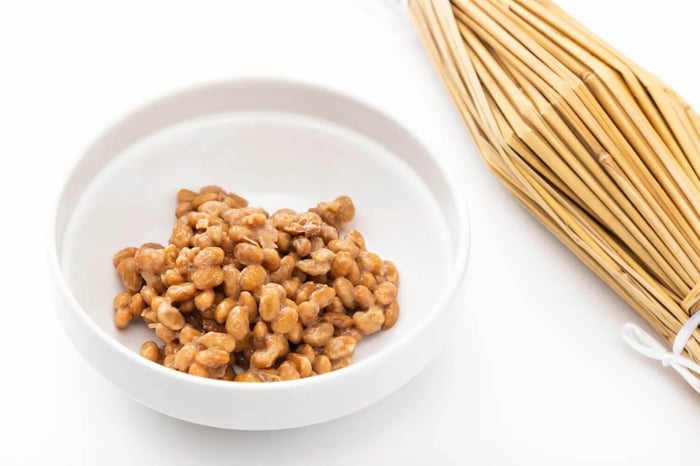
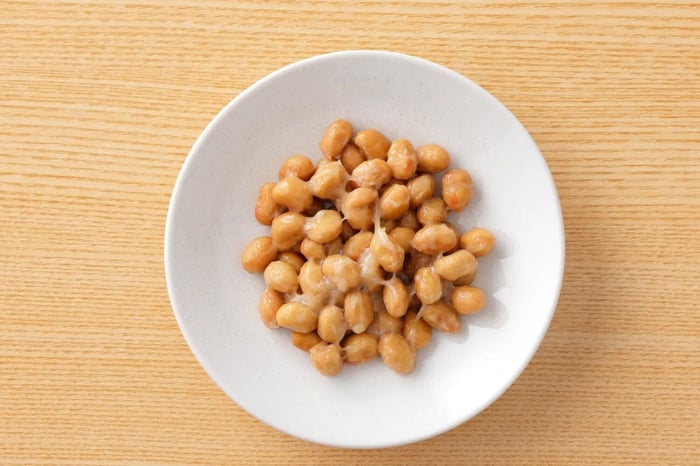
Nattokinase is a fibrinolytic enzyme produced during soybean fermentation using Bacillus subtilis natto. Researchers classify it as a serine protease, meaning nattokinase specializes in breaking down specific proteins .
Current research suggests nattokinase may influence fibrinolysis in a few simultaneous ways (Chen et al., 2018: https://doi.org/10.1177/1177271918785130 ).
1. Directly Hydrolyzes Fibrin
Nattokinase has been studied for its potential to break down fibrin. Fibrin is the structural backbone of blood clots. Some laboratory research suggests that nattokinase may act directly on fibrin proteins, rather than signaling the body to do so, which is why it is sometimes described as an oral fibrinolytic enzyme. According to some research, nattokinase reduced fibrinogen and clotting factors VII and VIII in healthy volunteers (Hsia et al., 2009: https://doi.org/10.1016/j.nutres.2009.01.009 ).
2. Converts Pro-Urokinase to Urokinase
Research also suggests nattokinase may support the body’s conversion of pro-urokinase into urokinase, another enzyme involved in plasminogen activation.
Urokinase helps generate plasmin, the enzyme the body uses to clear fibrin when it's no longer needed. This means nattokinase may not only interact with fibrin directly but also support the body's fibrinolytic signaling systems.
3. Degrades PAI-1
Another proposed mechanism involves degradation of plasminogen activator inhibitor-1, or PAI-1. PAI-1 acts as a natural brake on fibrinolysis by inhibiting t-PA activity. Elevated PAI-1 levels are associated with reduced fibrinolytic activity. Some research suggests that nattokinase may help manage PAI-1 activity, helping fibrinolytic signaling operate efficiently.
4. Increases t-PA Activity
Studies also suggest that nattokinase may support tissue plasminogen activator (t-PA) activity.
Since t-PA helps convert plasminogen (inactive) into plasmin (active), enhanced t-PA activity could theoretically support fibrin breakdown indirectly through the body’s natural pathways.
What Does the Research Show About Nattokinase and Blood Clots?
Dr. Hiroyuki Sumi discovered nattokinase's fibrinolytic activity in 1987 when he dropped natto onto a fibrin clot in a petri dish and watched it dissolve over a few hours (Sumi et al., 1987: https://doi.org/10.1007/BF01956052 ). Another one of the earliest foundational studies came from Fujita and colleagues in 1995, which examined whether orally consumed nattokinase remained biologically active after digestion. The findings suggested that nattokinase retained biological activity after passing through the digestive system. This is further confirmed in more recent research showing that orally administered nattokinase is absorbed intact and active in the bloodstream (Kurosawa et al., 2015: https://doi.org/10.1038/srep11601 ).
A 2017 PMC review, Nattokinase: An Oral Antithrombotic Agent , summarized decades of mechanistic and clinical research involving fibrinolysis, coagulation pathways, and cardiovascular biomarkers. The review noted that nattokinase showed promising properties in the literature examined, while also emphasizing the need for larger controlled human trials.
In 2021, a real-world safety study evaluated the use of nattokinase in patients with vascular disease . Researchers reported a generally favorable safety profile under monitored conditions. The study also suggested that nattokinase should be approached cautiously in anyone taking anticoagulants or antiplatelet medications because of potential bleeding risk.
More recently, a large 2025 ScienceDirect review analyzing hundreds of publications and patents described nattokinase as a “ multifaceted microbial enzyme ” with ongoing research interest across fibrinolytic, cardiovascular, and inflammatory pathways.
Research is currently underway on nattokinase as a potential aid in managing blood lipid levels.
Limitations on Research
Nattokinase research is promising but not conclusive. Several important limitations remain. Many studies are relatively small. Long-term randomized controlled trials are limited, and cardiovascular outcome data are lacking.
Nattokinase is not a replacement for anticoagulant therapy or physician-directed cardiovascular treatment. Certain people should avoid nattokinase unless specifically cleared by a healthcare provider, including:
Individuals taking blood thinners
People using antiplatelet medications
Anyone with bleeding disorders
Individuals preparing for surgery — it’s best to discontinue nattokinase use at least two weeks before any scheduled surgical procedure
Pregnant or breastfeeding individuals
Because nattokinase may influence blood clotting, you should always talk to your doctor before using nattokinase.
Toku Flow
Some people add nattokinase to their heart-health routine for its fibrinolytic activity, which is the most studied aspect of how it works.
Toku Flow is formulated at 10,800 FU per serving, aligning with the dose used in the Chen et al. (2022) clinical study published in Frontiers in Cardiovascular Medicine. Our formula also uses soy-free chickpea fermentation rather than traditional soybean fermentation and undergoes third-party testing for quality verification.
If you are considering nattokinase and currently take any medication that affects clotting or circulation, it’s important to talk to your physician.
The Bottom Line on Nattokinase and Blood Clots
Nattokinase appears to be capable of interacting with multiple fibrinolytic pathways involved in fibrin regulation and clot breakdown. Laboratory and human biomarker studies suggest biological activity across fibrinolytic and coagulation signaling pathways.
Important evidence gaps remain, especially regarding large-scale cardiovascular outcomes and long-term safety. For now, nattokinase is best understood as an actively researched dietary supplement with promising research and not as a substitute for professional cardiovascular care.
FAQs
Can nattokinase dissolve existing blood clots?
Research suggests nattokinase may support the body's natural fibrinolytic activity (the process of breaking down fibrin in blood clots). However, it is a dietary supplement, not a medical treatment, and should never replace anticoagulant therapy prescribed by a physician.
How is nattokinase different from blood thinners like warfarin?
Warfarin and other anticoagulants are prescription medications that block clotting factors with carefully monitored dosing. Nattokinase is a dietary supplement enzyme that works through different mechanisms. Nattokinase and blood thinners are not interchangeable, and combining them may increase bleeding risk.
How long does nattokinase take to work?
There is no established clinical timeline for nattokinase effects in humans. Most research has been short-term or small-scale. Any changes to your cardiovascular routine should be discussed with a physician.
These statements have not been evaluated by the FDA. This product is not intended to diagnose, treat, cure or prevent any disease. Keep out of reach of children. Consult with your physician before use if you are pregnant, nursing, have a medical condition, or taking anticoagulants. Discontinue use and consult with your health care professional if you experience any adverse reaction to this product.
Sources:
Nattokinase: An Oral Antithrombotic Agent for the Prevention of Cardiovascular Disease | PMC
Research Progress of Nattokinase in Reducing Blood Lipid | PMC